
Hyundai Expands Polymer 3D Printing with Two High-Speed Sintering Systems from ExOne
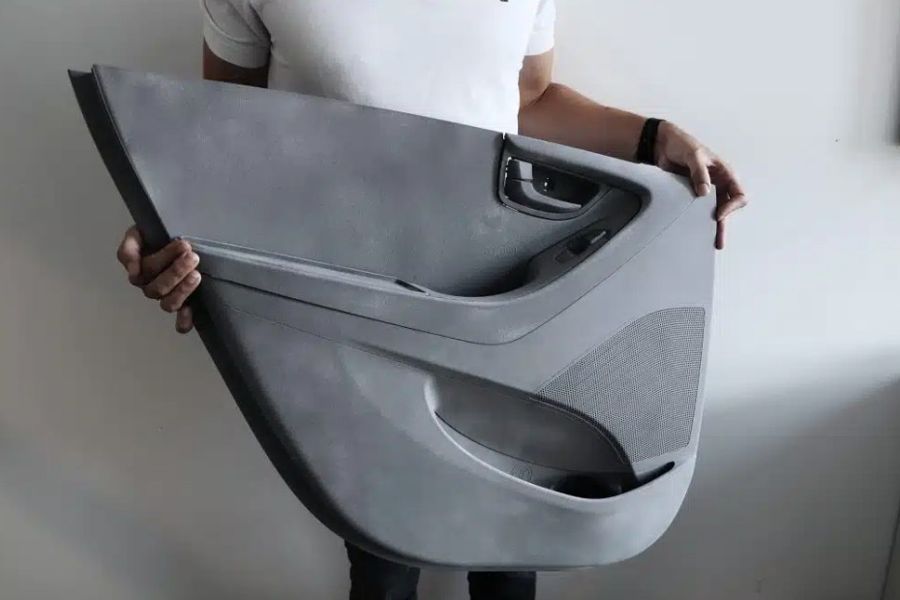
ExOne Global Holdings, a leading provider of industrial 3D printing solutions, announced today that Hyundai has installed two of its VX1000 HSS polymer 3D printers at the Hyundai Namyang R&D Center in South Korea.
Hyundai has been working with 3D printing since 1996. At the center, its newly formed Additive Manufacturing Solutions team brings together a broad range of additive technologies. The team supports pre-production and test-part manufacturing, small-batch production and prototyping for research, as well as the urgent sourcing of long-lead parts that would otherwise require tooling.
The Korean OEM has recently made a significant investment in ExOne’s High Speed Sintering technology to quickly produce large components, reducing assembly effort, joints, and tolerance stack-up errors.
Eric Bader, Chief Executive Officer, ExOne Global Holdings: “Hyundai is using High Speed Sintering exactly as we designed it, for full-scale functional parts. Keeping large polymer parts accurate and repeatable, print after print, is one of the hardest challenges in polymer 3D printing. We solved it, and that turns additive manufacturing into a tool automotive teams can rely on for real development work.”
ExOne High-Speed Sintering Technology
The VX1000 HSS printer is one of the largest polymer 3D printers on the market with a print volume of 1,000 × 550 × 190 mm (39.4 × 21.7 × 7.5 in) for PA12 powder, a high-performance engineering thermoplastic widely used in industrial additive manufacturing processes. A high-performance printhead with 8,000 nozzles delivers class-leading speed, printing even the largest components, such as a complete door panel, in a single print run.
In ExOne’s HSS technology, an infrared-absorbing ink is applied selectively to PA12 powder in the extra-large print bed and fused layer by layer with a sintering emitter. The powder- and ink-based process depends on consistent, highly precise temperature control to achieve the desired part properties, and the VX1000 delivers excellent temperature management across the entire build volume.
HSS technology offers design freedom well beyond prototypes and tooling, shortening design iterations from weeks to days while reducing development costs, and makes it possible to create geometries that conventional manufacturing cannot produce. Because the printed parts are real, functional components rather than mere models, complete components can be validated at full scale.
Fast Servicing, Real-Time Process Data, and a Shared Powder Supply
The two systems have also been designed for high availability and low maintenance burden. Replacing the sintering emitter or a print module is designed to be a routine task, substantially improving uptime. Both machines make their process data available in real time, so operators and manufacturing systems can continuously monitor and integrate the printers into existing production environments. A dedicated video livestream provides real-time visibility into the printing process.
Both VX1000 HSS printers are run from a single unpacking station and a central powder supply that can be flexibly arranged in a variety of factory and R&D environments.
Alfred Griesser, Deputy Head of Research & Development, ExOne: “The intelligent powder management balances very different build jobs and utilization levels and consistently delivers high-quality powder to both machines. That lets the team run up to 80 percent recycled powder without compromising part quality.”
Reliable operation of both systems at Hyundai is backed by ExOne’s global after-sales network, which provides production security across the full lifecycle of the systems.
News release from Exone, 08/09/2026